
A True Bastard
Love and Brotherhood and Betrayal and Bastards

The king’s bastard sibling is caught between his love for his brother and his love for the queen.
Sometimes, you’ve got an idea that could be a whole novel but know you’re never going to write the novel. In this instance, adopting a more stream of consciousness, zoomed out narrative voice let me fit it into a short story, which was a fun experiment. Without further ado…
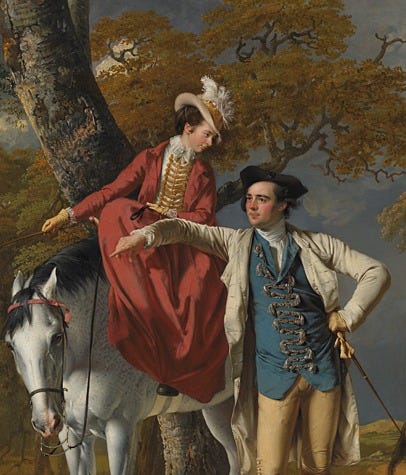
One day in late spring when we were both still boys, my brother – who was really only my half-brother because my mother was not the queen but instead a harlot who died birthing me and who I therefore never knew except by reputation (and what a reputation) – asked me something.
‘Brother,’ he began, as he was a kind creature who never remined me of our difference in rank. ‘Brother, shall I be a good king, do you think?’
And I told him, of course, that he would be. What crown prince in all the world has ever heard different?
‘I’m not sure,’ he continued. ‘But I would like to be. Would you help me?’
Readily did I agree. Quite what I could do, as a base-born embarrassment to all around me, I wasn’t sure. But I loved my brother – my half-brother – my brother, and so resolved to do what I might.
He was a slight boy, my brother. Womanly, some called him, though if that were true it would only vindicate the Partheniites in seeing perfection in the androgyne. Besides, any who said so in my hearing were left blue and bloody, even our royal cousins. Bastards, I called them once, meaning it only as an insult, but my brother found it so amusing and laughed his sweet, good-natured laugh until it dawned on me what I had said. There was a difference, I tried to explain, between a bastard and a bastard and, though I could do nothing about the former, I would not allow myself to be the latter.
As we grew – I more than he, though he was the elder by a year – he forced me to sit through his lessons in languages and history and philosophy of all kinds. I’m sure I only held him back, and our tutors considered teaching me an insult, but he would not hear of our being parted. To return the favour, I made him ride and fence, though he preferred a coach and had other men to fight for him. I reminded him daily that, forever, I was one of those men and would strike down all his enemies.
For that, my brother commissioned a painting and gifted it to me. It showed us in classical dress, holding each other as we ran laughing through a forest. On his head, a wreath. In my hand, a sword. I looked at him and he looked into the distance, towards a great city.
When we were coming of age, His Majesty – who I never addressed as father because he never asked me to – requested to speak to me, which he did only rarely. He wished to discuss my future. An army career, he decided. And perhaps a title when I married, assuming the woman was of good stock. I saw nothing against it, as long as my commission would be in a guards column, so I could stay in the capital with my brother. I had a few brothers, but His Majesty knew which one I meant.
And then, of course, His Majesty died. The Prolaisian Disease, which attacks through those most intimate instruments. Someone told me once that the Prolaisians call it the Theman Disease and the Themans blame it on the Xhodesii – that and everything else – but, regardless, His Majesty probably got it off some local girl. My mother, perhaps. It could take years to kill, they said.
Never could Idnedia, oldest of all the Reitan kingdoms, be without a king. They all stormed in while we were playing cards – the ministers and the courtiers and the family – and showed him all the respect they had denied him when we were children and bowed and called him Your Majesty and I bowed too but he kissed my forehead and bid me rise. The title my father had mooted, my brother bestowed upon me that very night, against the strenuous objections of his ministers.
And as a king, my brother had to marry. Queens and princes and princesses – he needed them and didn’t have any. Lists were drawn up of potential consorts. She had to be a foreign royal of youth and, preferably, the true religion. Then they – the ministers and the courtiers and the family again; my brother always knew who I meant when I said they with such distain – set about attacking the lists. This one was widowed and had produced no children despite three years of marriage. That one was overeducated and outspoken. The politics of the thing had to be considered too: alliances and wars and all the rest.
Somehow, a name emerged. A princess of Ofsania, one of the smaller kingdoms to make up the High Kingdom of Vascasia. It would strengthen our alliance with the neighbour that had long eclipsed us, they said. Her brother the king had the ear of the Vascasian king-emperor – was a childhood friend of his. An offer was made through our ambassador to that court and another was returned. There was haggling over the dowry. Finally, it was agreed.
No-one had yet met her, which is the way of it with royalty, but she was rumoured to have a passable beauty and to speak Idnedian, which seemed about all that could be hoped for. One final thing: someone had to fetch her. More than that, there was to be a marriage by proxy with her brother as witness, so she and my brother would already be married when they met.
For the proxy – he who would marry her in my brother’s place – every nobleman in the kingdom put themselves forward. My brother waved them away. I would go, he said. There was outrage. Sending a bastard could be construed as an insult. I asked him if he was sure. He said that he was. It was his brother he was sending, who was a count and a lieutenant-colonel in the guards. Who could be more suitable? There was grumbling, but in this His Majesty had his way.
‘Seduce her for me, Brother,’ he said with a smile. We embraced.
Off I went, with a fine suit of clothes for myself and gifts for her and a great entourage who all looked down their noses at me. Letters too I had, penned by my brother. I hadn’t read them, but I knew him well and could guess the sentiments. Something kind and reassuring and loving. A promise of happiness and a hope for companionship.
Through Idnedia we travelled, and the whole length of Vascasian-ruled Tonaza, and then into Vascasia itself, moving at a snail’s pace. If alone, I could have covered the distance in a single day that it took us four days to cross on that awful journey. Eventually, however, we arrived.
I met the brother, who was cordial as I played the diplomat with him. I met his ministers and his courtiers and his family – every royal had them, it seemed, each more insufferable than the last. But what of the girl?, I asked. The princess, I corrected myself. The queen, soon to be.
‘You’ll meet her on the morrow,’ I was told. The wedding by proxy, that meant.
I hardly slept that night, as though it were my own wedding. It was, in a sense – I would say the vows and take the hand – but it wasn’t, in all the ways that mattered. Finally, the appointed hour.
We met at the altar and I lifted her veil. Whoever had called her a passable beauty insulted her grievously. She was the most beautiful woman who had ever lived, I was sure. Tall and dark and to say any more would be to insult her further, as no words could do justice. Mine couldn’t, at any rate.
Having forgotten what I was supposed to say, she had to remind me. She swore the oaths and I swore them back. For my brother, I told myself. For him did I swear them. Yet it was I who held her. My hands on hers. My lips that brushed her cheek. My ragged breath that caught in a tightened chest.
Afterwards, at the banquet – once the princess had metamorphosed into a queen – I presented her the gifts and the letters. She read them and, when everyone else had retired to bed, she asked me about my brother. I told her of him.
‘You love him dearly,’ she observed to me.
I agreed. None had I ever loved more. None had ever been so deserving. She hoped she would please him. I marvelled she could doubt it.
Our return journey was far too fast. We could dally a little more, surely, I thought daily. No need to rush. Every day, I rode in the coach with her and we spoke and she laughed as we traded anecdotes and retorts. She despised coaches, she revealed. Far too cramped. So I called for horses and we rode a few hours and all was bright and weightless.
She read the letters over and over and peppered me with questions about my brother. Was he very severe? Quite the contrary. But serious, was he serious? He could be. He was a king, after all. What were his pursuits – what did he enjoy? Reading and the theatre. He was a patron of the arts. But mostly he worked. He was a very diligent king. But did he not ride and hunt? Not habitually, no. Only when I could persuade him.
One evening, quite late, the flow of her questions ceased. There was still a query on her face – I could see it clearly – but she found trouble articulating it. I encouraged her. She demurred. I promised that, whatever it was, I would answer truthfully. She made me swear to it. Finally, she asked: did he keep a mistress? Or mistresses? It was normal, of course, but she held out hopes…?
He didn’t, I replied. In truth, though I didn’t say this, he had always been too embarrassed to accept the many offers a crown prince, and then king, habitually endured. Her face, so lined with worry, unburdened. Do you think he will love me? Truly love me, not just as a king to his queen but as a man to his wife? Yes, I said. After all, I could not understand how any being in all the world could fail to love her.
We arrived back home and my heart grew heavy. I went with her and presented her to my brother. Just the three of us, before she was shown off to the court. They had been married already for weeks, yet their first words were stiff and formal. I joked with them, in that familiar way I had with both. Their next words were, nonetheless, stiff and formal still. I coaxed them like skittish horses but it was no use.
She was presented to court and I guided her through it, always at her arm and murmuring in her ear. The intimacy of it set me aflame. In her other ear, my brother attempted the same but seemed always to say the wrong thing. He wanted to reassure her, I knew. She found him only paternal, I could infer. She wanted to charm him, in that effortless way she did. He thought it put on – as charm so often was when directed towards him – and responded coldly.
He showed her a painting he was planning to hang in the Hall of Roses. In it, my brother sat on his throne, looking straight ahead with another besides him. Behind the thrones, figures of the court. First amongst then was myself, gazing at my brother with a hand on his arm and another on the hilt of my blade. In the other throne, a woman. Her face had yet to be painted. Her Majesty would have to sit for it, to complete the picture, he explained.
As we left, someone shouted, ‘Get us a prince tonight, Your Majesty!’ and everyone laughed. My brother distrusted the court’s laughter. Always had done. He reddened.
‘You’ve had a long journey,’ he said to the queen. ‘You may retire to your apartments. I needn’t visit you tonight. Would you escort Her Majesty, brother?’ That last directed to me. In this, as in everything, I obeyed his command.
She begged me enter the apartments, which she was seeing for the first time, and buried her head in her hands.
‘What did I do wrong?’ she asked. ‘Why doesn’t he want me?’
I reassured her that he did. He was only trying to be considerate. I would talk to him. So I did, going to him and saying that she felt he had acted without warmth. That he needed to show passion and desire – that was what she wanted.
‘I would feel rather silly, showing all that, brother. Should I write her a letter, do you think?’
The next day, the consummation was arranged. The royal physician was called, to observe the act and ensure it was properly conducted. It was the event that would truly bind their marriage, under Eynas Reito and under the law. In ages gone, anyone who wanted could have looked in on the royal lovemaking. Royalty was more civilised now.
I waited outside the room with the ministers and courtiers and family, slowly smacking the back of my head against a wall for perhaps half an hour. I tortured myself with thoughts and tried to obliterate them. The physician exited the royal bedchamber and shook his head.
‘Their Majesties have agreed to try again tomorrow,’ he said.
The queen left after him, staring at the floor. The rest departed, save I who knocked on the door.
‘It was that awful man,’ my brother said, after bidding me in. ‘I couldn’t… well, how is a man expected to under those conditions?’
Ignore the man. Focus on her. That was my advice.
‘I tried, Brother, but that made it worse. What if she doesn’t want me, but only a crown? A woman like her could never really want me. What if she’s disgusted when she looks at me?’
She wasn’t, I told him, and then I left him and went to her.
‘I thought men were supposed to…’ she began, before thinking better of her words. ‘They tell me I’m no beauty, but am I truly that ugly?’
I hated them and wanted to hurt them, whoever they were. Ministers, courtiers, family most likely. Bastards every one of them. Real bastards, not my kind. I told her some of how he felt, though it left me feeling awkward and confused and jealous.
For weeks, it continued like that. Me with the two people I loved most desperately, desperately trying to make them love each other, and desperately hoping they wouldn’t. The consummation came, though it took four tries and my brother didn’t often visit Her Majesty’s chambers for repetitions.
‘I feel as an imposition on her,’ he told me. It was too awkward. He was sure it was mere duty, on her part, which left him with no joy in the act.
‘He doesn’t love me’, she told me. They shared no interests. Couldn’t carry a conversation. ‘When he looks at me, I see no passion behind his eyes.’
If she could see passion in the eyes, I wondered what she saw in mine.
When summer came, she asked my brother if she might go to the country for a few weeks. To a house he had gifted her and which she had yet to see.
‘Of course,’ he said, and I cringed to hear the relief in his voice. I was sure she could hear it too. ‘Take my brother with you – he loves the country and you get on so well.’
When she left, he gripped my arm.
‘Talk well of me with her. Make her think kindly of me. Perhaps, on her return, things might be better between us.’
I assured him that I would.
The journey reminded both of us of our first, when I had brought her to her husband and king. As we travelled, lightness and gaiety returned and we spoke easily of everything, though never of the court. I thought little of my brother. I wondered if she thought of him, though.
Our weeks in that house were joyous ones, full of riding and hawks and dogs. Once, we got a letter from His Majesty, asking when we planned to return. The queen answered, though I do not know what she said.
And one night, we drank more than was proper and whispered secrets we oughtn’t have. Yearnings. Conflicts. I was invited to kiss her hand, as I often did, yet I lingered and my warm breath caressed her fingers and I was on my knees before her. No words were spoken, yet there was an invitation. A boundary we tested.
On that night, we stopped at the boundary. Looked across it and imagined but took not a step. Another night, however. On another night, we stepped.
Eventually, we returned. My brother sent me a letter. He needed me. It was the ministers and the courtiers and the family, as usual. Postponing his policies, attacking his appointments, keeping close their long knives, and always asking when a prince might be produced.
When I greeted my brother – absent of the queen, already in her own apartments – he embraced me and I almost wept on his shoulder. He repeated that he needed me. I would sound out the army; ensure its loyalty. Certain generals needed to be retired. Garrisons moved. I would be promoted – only I could be trusted. Was it truly so dire?, I asked.
My brother thought that it was. Did I not remember the Summer Plot against his – our – father, when we were boys? So easily could it have gone the other way. Their dynasty was still but recently established. It was still so easy to imagine an alternative.
‘And how is Her Majesty?’ he said as I was leaving. An afterthought.
She was well, I told him. He should visit her. He was busy, he replied.
We were careful at court, until we weren’t. Rumour swirled and, as is the way with rumour, we were the last to hear of it. His Majesty raised it with me one evening, in so offhand a manner. It just went to show that his enemies would do anything to discredit him and his queen and his favourite brother. And so ridiculous a libel, when all at court knew how close we brothers were to each other. That neither of us ever could act against the other.
I nodded and failed to meet his eye, so unlike myself. It was a wonder I had hidden it even so long as I had. His mind was quick, my brother’s, when it was not clouded by love. In one gesture of mine he knew, and in one gesture of his I could recognise that. So intimate was our fraternity.
Still not looking at him, with tears on my cheeks, I told him that my mind and my heart and my body were his, utterly his, eager for his every command unto my dying breath. But they were hers, too.
‘You’re a bastard. No brother of mine. A true bastard.’
And I nodded, for I was. A bastard in deed as in birth.
A good and kind creature His Majesty was still. I was not exiled – not officially – but promoted and appointed general of all forces on the Daastrijnian frontier, far away from my king and queen. A year I passed there, surveying stores and preparing plans and writing regulations. Rumours reached me, of a different nature to those my brother – my brother no longer – had heard and dismissed.
I sent His Majesty a letter. When he didn’t reply, I sent another to Her Majesty, for the good that would do. I worked quietly and in full determination. One man, I reassigned. Another, I goaded into duelling his fellow officer and then court martialled them both. I pruned my columns until they flowered with loyalty to their commander. And I waited.
The rumours came again, ever stronger. The year was up and my wait too. With two brigades of infantry and another of cavalry, I marched on the capital under a burning summer sun. Word preceded me and, for a week before my arrival, the court buzzed with the news. I was called a traitor. Proof of what happened when a man was raised above his station. That bastards were born of vice and therefore only capable of furthering it: of a consuming and covetous lust for everything they might imagine. They knew no gratitude. Show them a crown and they would grasp it hungrily.
We reached the capital and occupied it, seizing control of its defence from the guards columns I had once counted myself amongst. Officers of those columns, I arrested. The soldiers, I disarmed and sequestered in their barracks. My soldiers even marched into the palace itself and dragged some screaming from their apartments.
Finally, I went to my king. He looked at me in confusion, but without fear. Never, he declared, could he fear me. She was with him. I imagined a boundary. It was within my power: to take his city and take his crown and take his wife. I looked across the boundary. I recoiled from it.
I knelt and presented him my sword. Next, came the papers. The letters and reports and secret memorandums. Those that proved the conspiracy His Majesty had suspected, and that the soldiers of his own guards columns had been poised to arrest him and force him into naming his enemies to every position of influence. To reduce him to a puppet and a prisoner.
The papers – redacted when needed – were released. The plotters executed. My actions lauded. And I once more had a brother and a place at court. For a week did I avoid the queen and she me. The avoidance couldn’t last and, for a single night, I knew perfect bliss.
The next morning, I went to my brother and I bowed and he kissed my forehead and laughed at me but I shook my head and told him I wished to return to my previous appointment. I think he understood, finally, the war in my breast. And I understood it was a war I could not survive.
Once more did I return to court while my brother still lived. It was three seasons after I left, in the throes of spring, when I was invited to celebrate the continuation of the royal line. My brother took me aside at the banquet and showed me the nursery and the small bundle within.
‘She is my heir,’ my brother said. ‘The only one I am like to get. My legacy. My little princess. Mine. Protect her, if I am unable to, Brother. Love her.’
Approaching the cot, I lost myself in her pudgy face and I reached out to hold her hand between my thumb and forefinger. I said that she was perfect. That every part of me was at her disposal, for any need she could ever have.
‘Thank you.’
It was not my brother’s voice. I looked around. He had left. The queen stood in his place. My voice faltered on all the words I could not say and questions I could not ask. Instead, I fled.
Every year, I was sent a miniature of the princess. I treasured them. One year, there was no miniature but a full painting that took up an entire wall of my dining room.
Her Majesty sat with a child on her lap. Behind her, looking stoically at the viewer and with a hand on her shoulder, His Majesty. The child, though, looked over that shoulder at a fourth figure. A man, off to the side. He appeared distracted, tending to a horse and with a dog at his feet. But no, his eyes were on the royal couple and the princess. And I knew his face, for it was mine.
Thank you for reading. If you enjoyed this story and would like more like it, along with my non-fiction, feel more than welcome to subscribe. If you didn’t, likewise. This is a little different to my others, so I’d love to hear your thoughts on it.
My next post (sorry substack, I mean ‘article’) on Thursday 19th might be a guide to worldbuilding governments in fantasy and sci-fi, AKA my excuse to talk about my boy Rousseau. But, excitingly, it might otherwise be a discussion of my decision to query my finally finished (second) novel — all depending on whether I can actually start sending it off before then. Two weeks after that, I’ll be releasing the story I initially promised would go in this slot: Fortune’s Favour, a return to naval fiction heavily inspired by Patrick O’Brian’s novels.
Can’t wait that long? This might help orientate through a perusal of my back catalogue:

Now I want to read this novel! I've been reading the Farseer books lately, am I wrong to think that Fitz was on your mind while writing this?
I very much enjoyed this story. I knew I was in for a ride when I read the title, pulled me right in, and the pacing and passage of time is so well framed in this short.