
Strike the Colours!
Thrust into command of a losing battle, even surrender is a kind of victory.

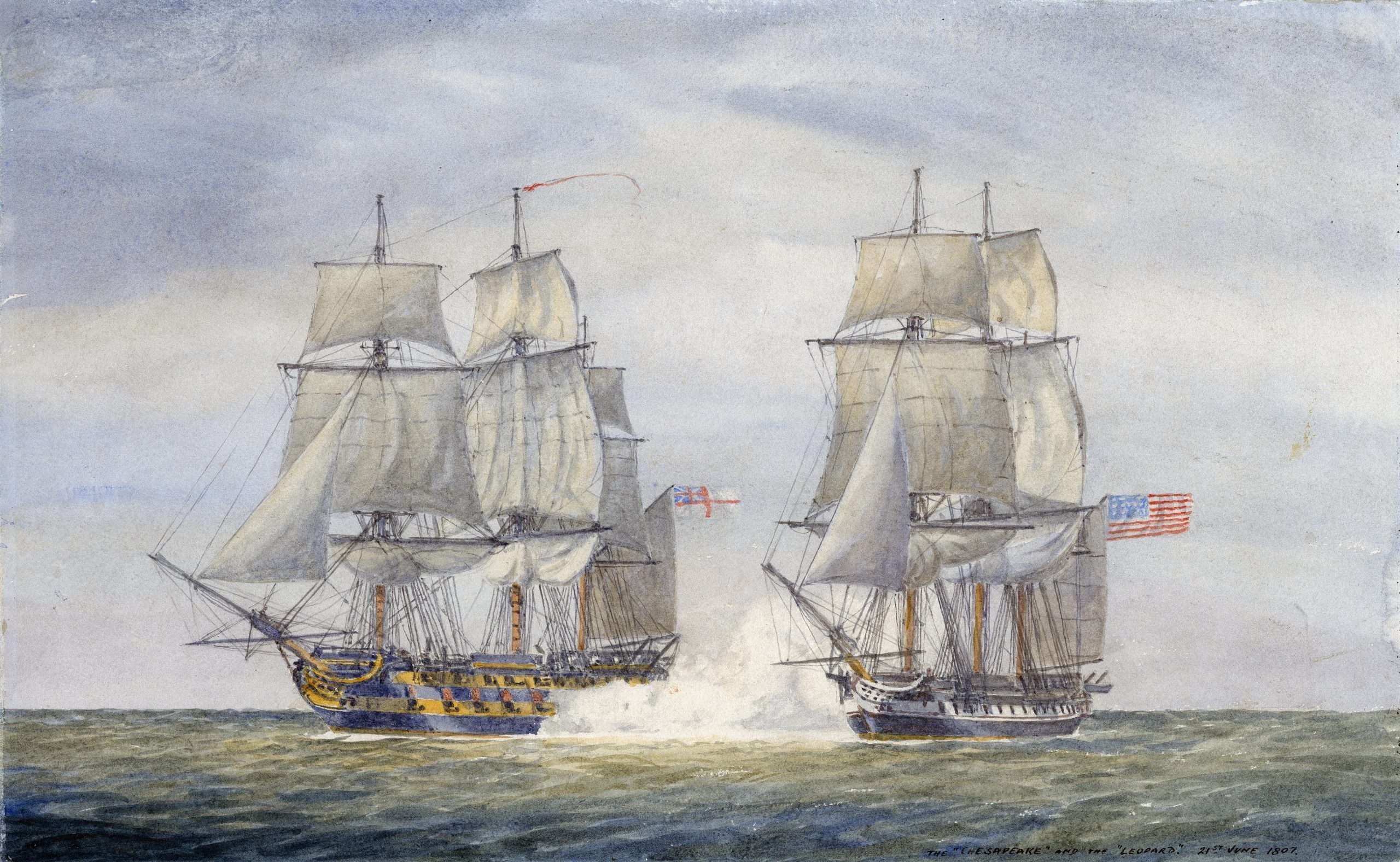
Shouting over the roar of cannon and screams of men, Lieutenant Ettore Bortani urged his charges to reload, reload, reload again. To give as good as they got, though they’d been fighting an hour and oh so many were covered in blood they hoped wasn’t theirs and hastily tied bandages. Firing though acrid smoke obscured the far end of the deck and the enemy ships, identified only through the regular flashes of their rows of cannon.
Fifty guns aboard old Trikea, and two-and-twenty of them, the heavy four-and-twenty pounders, were Ettore’s, on his domain of the lower gundeck. Eleven facing to starboard and the battle. Eight still operational, all suffering from crews diminished in size and fatigued beyond mere fatigue, sweat sticking their sailors’ tails to the back of their bare torsos.
And they were losing. Ettore hadn’t been on deck since the fighting began; he could only guess how the ships manoeuvred and whether either of their allies had already struck their colours, but he didn’t need to know the details to know they were losing. He could see it all around him. Captain Zaduccci had been sure they couldn’t lose while they held the advantage in numbers – three Thasionan ships to two Xhodesii – and guns. Ettore had never been so brash.
The old girl was well past her prime; long outclassed by larger ships-of-the-line. Larger ships such as Saphalones, of four-and-sixty guns. The captain had accepted that, but reasoned that they had the support of Reverence, of six-and-thirty guns, and Prigliato, of two-and-twenty, while Saphalones sailed only with Tirasos, of two-and-thirty. They could outmanoeuvre and outshoot the Xhodesii.
Privately, Ettore had made the dissenting argument: that their enemies’ guns were heavier on average and with fewer ships could concentrate firepower, but Captain Zaducci and the first lieutenant had dismissed his concerns. Cautious Lieutenant Bortani, more a sailor than a fighter – he knew his own reputation. Vindication gave him no satisfaction.
It was out of his hands. Ettore’s job was to keep the guns firing as long as he was ordered to, no matter the cost in flesh and powder. So he encouraged the sailors and sent down to the magazine for ever more powder cartridges. He did his duty.
‘Lieutenant Bortani!’
A high voice, it pierced through the booms and shouts. A midshipman, perhaps, or one of the powder boys. Ettore placed a hand on the beam above him, bracing himself as he peered through the smoke.
‘Here,’ he called back.
And out of the smoke she emerged, a fragment of the divinity she served. Her face lined and severe; her presence radiant. An island in a sea of masculinity. Even amidst their haste, sailors who noticed her stopped to bow and touch their foreheads. Instinctively, Ettore reached down to wipe his blackened hands on his fustanella.
Madam Castiolo, priestess of Trikea. She who had blessed the ship when she was laid down, dedicating her to blind Trikea the just, such that she could carry the goddess’s name and a figurehead in her likeness. Madam Castiolo had served as priestess aboard ever since, longer than anyone else on the crew, maintaining Trikea’s shrine at the prow and pouring the daily libations of wine and oil and honey in her honour.
For like all of the greatest Islander vessels, Trikea was not merely a ship but a floating temple dedicated to her namesake deity. When such ships clashed, as Trikea and Saphalones clashed, it was a fight of the very gods, sailors merely their mortal instruments.
‘Madam Castiolo,’ Ettore acknowledged. ‘Should you not be with the surgeon, or up on deck? Have you come for the wounded?’
‘Captain Zaducci is dead. You have command, Lieutenant.’
Her words were a dive into cold water.
‘No. Where is Lieutenant—’
‘The first lieutenant fell half an hour ago. I thought you already knew. Trikea is yours.’
‘But how…’ he trailed off as a gun went off, drowning out thought for a brief, blessed moment.
‘Lieutenant! Command is yours. You’re needed on deck.’
‘Yes. Of course. Of course. Would you come? It would do the men good, to see Trikea’s priestess amongst them.’
Castiolo agreed, though in truth Ettore was merely grasping at her calm and authority like a drowning man with a scrap of driftwood. He left the ship’s gunner in temporary command of the lower deck and hurried away.
They emerged onto the quarterdeck and were met by chaos. Spars and rigging cut through by cannonballs lay strewn about, having pierced the netting above. Sailors clutched at the ropes, trying to trim a ravaged sail.
Ettore looked about as he cried for reports. Between shouted words and his own eyes, he grasped the situation. Saphalones stood within musketshot, broadside to broadside and closing the distance. A little behind her, Tirasos threatened to cross Trikea’s stern and rake her. She fired both sides: her starboard guns into Trikea and her larboard ones into Prigliato, whose attempt to outmanoeuvre the Xhodesii vessels had left her alone and vulnerable. In Trikea’s wake, Reverance had struck her colours. Fire raged on deck and her sailors had fled into her boats, impotently watching the battle and their burning ship.
They had been outmanoeuvred and outgunned. It was a fight they could not win.
‘Why have we not surrendered?’ asked Ettore, not caring who might hear. He would give the order momentarily anyway.
‘Zaducci couldn’t strike the colours,’ said Castiolo
‘He was too stubborn, you mean? Then he paid for it.’
‘No, no. I mean… did you not hear his order, Lieutenant, as we entered battle?’
Ettore’s eyes flew behind them to the poop deck and the battle ensign flying above it.
‘But surely he didn’t actually—’
‘He did. For morale. For heroism.’
‘Nail the colours to the mast?’
‘Indeed.’
Ettore dropped his voice. ‘Then what? We sit here until the ship is timbers?’
‘You have command,’ the priestess repeated.
‘Can we cut them down?’ It was a question no-one was going to answer for him. ‘We’ll have to cut them down. Pray for us, madam.’
With a confidence that was all artifice, Ettore raised his voice and issued his orders. The fourth lieutenant was sent down to the lower gundeck, to take command there. As long as battle still raged, they would continue to put up all the fight they had.
He asked a midshipman to look through the signal book and see if they could tell Prigliato to surrender. There was no point in her suffering longer than she had to. Then, the signal book would be thrown overboard. No matter what happened, it was Ettore’s duty as commander to see that the secret Thasionan signals did not find their way into enemy hands.
As for heading, he asked for a point more to starboard. It would give them an inferior angle in their bombardment of Sophalones, but delay Tirasos in her quest to rake them – to fire directly into Trikea’s stern, sending balls down her very length, visiting horrendous damage on all inside.
He was clear with his officers: they would surrender as soon as they were able to. Until then, all their primary orders were to protect Trikea and her crew.
And then there was the most critical task. Trikea flew two ensigns into battle: the larger at the stern and another atop the mainmast. Ettore ascertained that only the former had been hammered into place, so ordered the second struck without delay. But the Xhodesii ships would not recognise surrender until neither flag flew. There was nothing else for it. Under enemy fire, men would have to climb up and hack it down.
It was a huge thing, as tall as half a dozen men, for ease of visibility in the confusion of battle. All the harder to either pull the nails or slash the canvas along its entire height. It was a task, Ettore decided, he could give to none if he would not take it up himself. He gave his last orders, then asked for a group of volunteers and a boarding cutlas. The smallsword at his waist would be little use against canvas: a more brutal implement was needed.
Though the cutlas was provided, none stepped forward to volunteer. Ettore understood and despaired.
‘I shall go with you, Lieutenant,’ said Castiolo. ‘Though I’m not much of a climber.’
‘Thank you, madam. You are an inspiration, though I could not ask for more than your prayers.’
Yet – as Ettore was sure had been her intention – her example shamed four sailors into stepping forward, old hands all.
With hollow words of encouragement, Ettore led them up to the poop where, on the larboard side, stood the mast whose only task was to fly the glorious colours. The naval ensign of the Republic of Thasionos, a symbol of holy reverence to him: three horizontal stripes of blue, white, blue, with the State Crest emblazoned in the middle. And they were to desecrate it.
As Ettore looked around, he saw Castiolo was still amongst them.
‘Madam, you should return to the quarterdeck. Or to the shrine or the surgeon. This is no place for you.’
‘You asked for my prayers and it is here they are most needed. Trikea is my mistress and Trikea is my charge: I shall decide how best I may serve her.’
Ettore declined to argue, though it seemed to him that she risked her life for little, standing with them in full view of the sharpshooters in Saphalones and Tirasos’s tops. Instead, he slipped off his shoes and jacket and wiped the sweat off his hands and led the way directly up the mast.
Almost immediately, Xhodesii muskets were turned on them. Ettore heard balls whizz into the ensign and strike the gunwale. He kept climbing, crawling up the mast like he was a young midshipman again. The ship rocked and he dangled briefly above open water, clutching on though his shoulders already burned. He shook his head – he had to set an example for the men – and kept on climbing.
He was in line with the bottom of the battle ensign, but still had to clamber up its entire height. As he did, he could see the nails driven through the canvas, pinning it to the wood. They’d been driven all the way through – impossible to pull out without the right tools.
Below him, a man grunted and Ettore looked down to find him shot through the gullet, looking up and gargling blood. Ettore reached out, but the sailor went limp and fell. The second man down had to brace and push him off. The carcass dropped into the sea, another soul for Kathor to ferry to the bottom of the seas and out the other side, into the Underworld. Another denizen for Lord Demesios’ domain. He was not the first to die that day and more would join him with every moment of delay. The climb continued.
Finally, Ettore reached the very top of the mast. He wrapped his legs firmly around it and gripped the top with one hand while he reached for the cutlas with the other. The sword, he drove into the canvas of the ensign, cutting up in sawing motions until he’d produced a great tear, a foot in length, at the top of the flag. He worked the sword down, extending the cut further. Below him, the sailors replicated his actions to the same effect. They were doing it. They were cutting through.
More musket shots and Ettore cringed away, almost losing his grip. Somewhere below him, a man screamed and then another. One fell immediately. The second hung on and – Thasi bless him – stuck his weapon into the canvas when he finally dropped, cutting through a few more feet as his final act.
Ettore’s section hung free of the mast. He had to start climbing down, to finish the task. There were only two of them left, the other towards the middle and working his own way down. Great gashes ran up half the ensign’s length. Their victory was in sight.
Ettore didn’t see what happened. The final sailor was there, and then he was not. He issued not a cry nor even a grunt. He must have fallen to the sea. It was as though he had never been there; as though he had been summoned to the gods. And Ettore was alone on the mast, which was slick with sea spray, and he could barely hold on, but he had to and so he did. He cut through another section, connecting the slashed made by two of his fallen comrades, and over half of the flag was flying free, pulling away from the mast and the ship, as though it too longed for the waves.
He kept going, sliding slowly down, slashing and hacking and sawing and ripping. So close to complete, the awful task almost done. A glance behind him. Tirasos was finally in position, despite Trikea’s turn: broadside to stern. Her side was briefly a wall of fire and smoke. Cannonballs skipped across the short distance between the two ships, entering Trikea at her vulnerable back, just below the waterline, straight into the lower gundeck.
Trikea jerked violently. Ettore’s hand slipped and his chin smacked the mast. His legs went momentarily limp and he was falling, falling off the mast, flailing wildly as the deck rushed up to meet him. He hit, his head thudding against it, his teeth slamming together, a sharp pain at the tip of his tongue and blood in his mouth. He tried to get up but pain in his side stopped him. Broken rib, maybe. He looked up at the colours, the glorious ensign, tugging against the wind, almost free, still attached only at the very bottom. Yet he’d failed and Trikea and her crew would suffer for it.
‘Can you get up?’
It was Madam Castiolo. She stepped into his view, standing over him, peering down like the gods from the highest peaks. Even shaking his head pained him.
‘So close,’ he muttered.
She reached down and picked something up. The cutlas he’d dropped.
‘Now you’ll be the one praying for me,’ she said, not looking at him but up at the ensign.
Before he could say a word, she had begun her climb.
She wasn’t a good climber – about that she had not lied. But she had served aboard the ship for over two decades, its entire life. If Trikea was anyone’s, it was hers. All ships were alive – every sailor knew that – and no ships were more alive than those bearing the names of the gods. Trikea, it seemed to Ettore, welcomed the priestess, keeping stiller for her to ease her journey.
And, lying on the deck, gazing up, Ettore prayed. He prayed to Neros, King of the Sea. To Thasi, patron of their city, which was named in her honour. And to Trikea, for the blind goddess to watch over her servant and ensure that the right thing, the just thing, be done this day.
A flash as the cutlas caught the sun, and then it bit deep into the colours and was driven through, separating them entirely from the mast. The blue and white was picked up by the wind and carried away. A last few scatted shots and Trikea’s guns ceased. And those of the other ships too. And the seas were quiet. A gull laughed overhead and the waves lapped against Trikea’s battered hull.
Madam Castiolo slid down and the cutlas fell from her fingers. Ettore smiled and, through the pain, propped himself onto his elbows. Castiolo turned. Ettore’s expression turned to shock. Her blue frock was sullied by dark red and her hand went to her side, where the blood flowed free like a holy spring.
‘I thought I felt—’ she began, before dropping to her knees, her olive complexion turning white as the snow atop Mount Selos.
Forgetting the pain, Ettore crawled to her and cradled her and screamed for aid but it came too late. He watched his own tears fall onto her face as the priestess of Trikea departed for her patroness, the blind goddess who was just in the way that a balanced scale was just, but who could never be accused of mercy. Prices were always paid for her justice. It was not for mortals to quibble the exchange.
Thank you for reading. As regular readers can surely tell, I’ve been on a bit of a naval kick recently, which I hope to continue semi-soon with a sequel to Fortune’s Favour, following the continuing adventures of Daniele A’Themi and the rest of Fortune’s crew. Readers with very good memories for made-up ships might even spot that this is Tirasos’s second outing, after her role as Fortune’s saviour in the aforementioned story.
But so as not to overload with too much of the high seas, my next short story, in four weeks, will probably be A Spill of Wine, following the intrigues of the Savarian royal court (previously seen at a glance in the stories Four-And-A-Half Engagements and King of Chefs, Chef of Kings). Before that, in two weeks, my promised article on geopolitics in fantasy will finally arrive.
Don’t know where to continue with my writing? This might help:

Heartbreaking
Great work! I liked this story. You've got an intriguing world.